
How to do a deadlift
A barbell exercise that mainly works the lower back, along with the glutes, hamstrings, back, traps, forearms and quads.
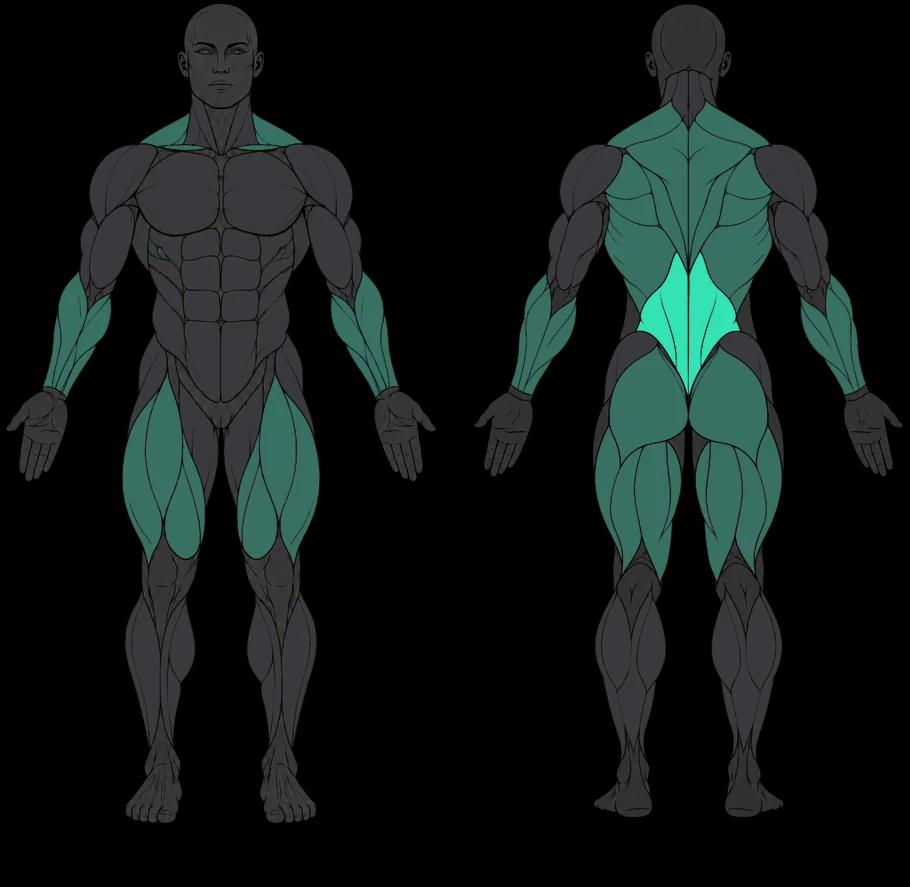
- Mainly works
- Lower Back
- Also works
- Glutes, Hamstrings, Back, Traps, Forearms, Quads
- Equipment
- Barbell
- In FitMotion
- Deadlift (Barbell)
Steps
- Stand with feet about hip-width apart and the bar over the middle of your feet.
- Hinge at the hips and bend your knees to grip the bar just outside your legs.
- Bring your shins to the bar, lift your chest and flatten your back.
- Take a breath, brace your core and pull the slack out of the bar.
- Push the floor away and stand up tall, keeping the bar close to your legs.
- Lower the bar by hinging at the hips first, then bending the knees once it passes them, and set it down under control.
Form cues
- Bar stays over mid-foot and in contact with or close to the legs.
- Neutral spine from head to hips, no rounding of the lower back.
- Shoulders slightly ahead of the bar at the start.
- Hips and shoulders rise together off the floor.
- Stand tall at the top without leaning back.
Breathing
Inhale and brace before each lift, hold it through the pull, and exhale at the top or once the bar is back down.
Common mistakes
- Rounding the lower back; reduce the weight and brace harder before the bar leaves the floor.
- Bar drifting away from the body; pull it back into your legs with straight arms.
- Hips shooting up first; push through the legs so the chest and hips rise together.
- Hyperextending at the top; finish by squeezing the glutes and standing straight.
Easier and harder versions
Easier: Pull from blocks or a raised surface, or use a kettlebell between the feet to learn the hinge.
Harder: Add a pause just below the knee on the way up, or increase the load gradually.
Caution
This loads the spine heavily; build the weight slowly and check with your doctor first if you have a back injury.
Suggested starting point
3–5 sets of 3–6 reps
Log your sets and see your progress in FitMotion.
 Coming soon to Google Play
Related exercises
Exercise isn't safe for everyone. Talk to your doctor before starting a new exercise program, and stop if you feel pain, dizziness or shortness of breath. FitMotion isn't medical advice or a substitute for a health assessment.