
How to do a kettlebell swing
A kettlebell exercise that mainly works the glutes, along with the hamstrings, lower back, forearms and abs.
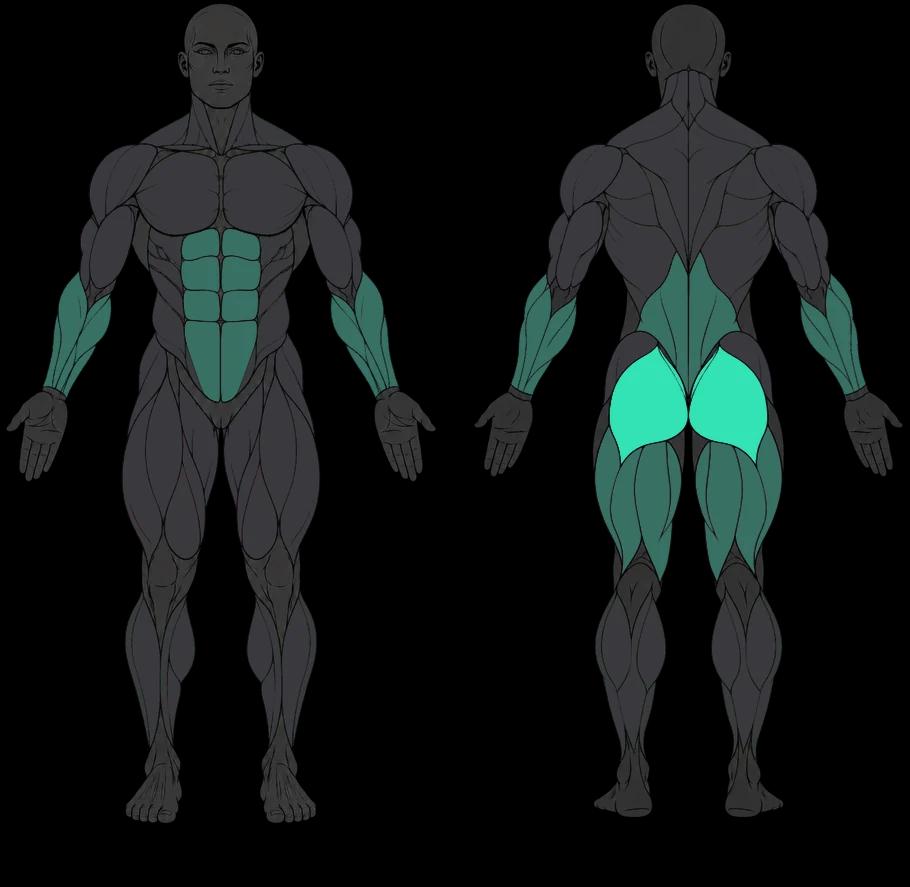
- Mainly works
- Glutes
- Also works
- Hamstrings, Lower Back, Forearms, Abs
- Equipment
- Kettlebell
- In FitMotion
- Kettlebell Swing
Steps
- Stand with feet a little wider than your hips and the kettlebell on the floor about a foot in front of you.
- Hinge at the hips, grip the handle with both hands and tilt the bell back toward you.
- Hike the bell back between your thighs, keeping your back flat.
- Snap your hips forward and stand tall so the bell floats up to about chest height.
- Let the bell fall back and hinge again, guiding it between your legs for the next rep.
- To finish, let the swing slow down and park the bell on the floor in front of you.
Form cues
- Movement comes from the hips, not a squat.
- Back flat and neck neutral.
- Arms relaxed; they guide the bell, not lift it.
- Stand fully tall at the top with glutes squeezed.
- Bell passes high between the thighs on the backswing.
Breathing
Exhale sharply as you snap the hips forward and inhale as the bell swings back.
Common mistakes
- Squatting the bell up; push your hips back and keep the shins more vertical.
- Lifting the bell with the arms; let the hip snap drive it.
- Leaning back at the top; finish standing straight with glutes tight.
- Rounding the back on the backswing; keep the chest up and spine long.
Easier and harder versions
Easier: Use a lighter bell and practice the hip hinge with a dumbbell deadlift first.
Harder: Use a heavier bell or progress to one-arm swings.
Caution
Clear the space around you, and with a back injury check with your provider before swinging.
Suggested starting point
3 sets of 10–15 reps
Log your sets and see your progress in FitMotion.
 Coming soon to Google Play
Related exercises
Exercise isn't safe for everyone. Talk to your doctor before starting a new exercise program, and stop if you feel pain, dizziness or shortness of breath. FitMotion isn't medical advice or a substitute for a health assessment.